Top search terms
China Geographic Information Industry Association's 2025 Working Meeting of the Industry-University-Research Integration Innovation Technical Committee Held in Beijing
2025-06-25
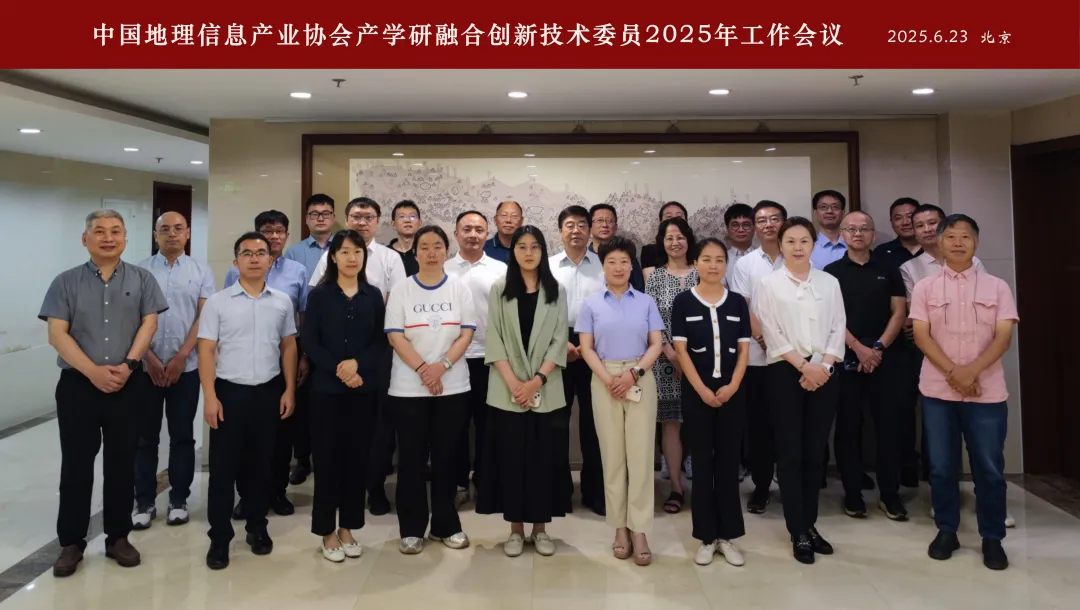
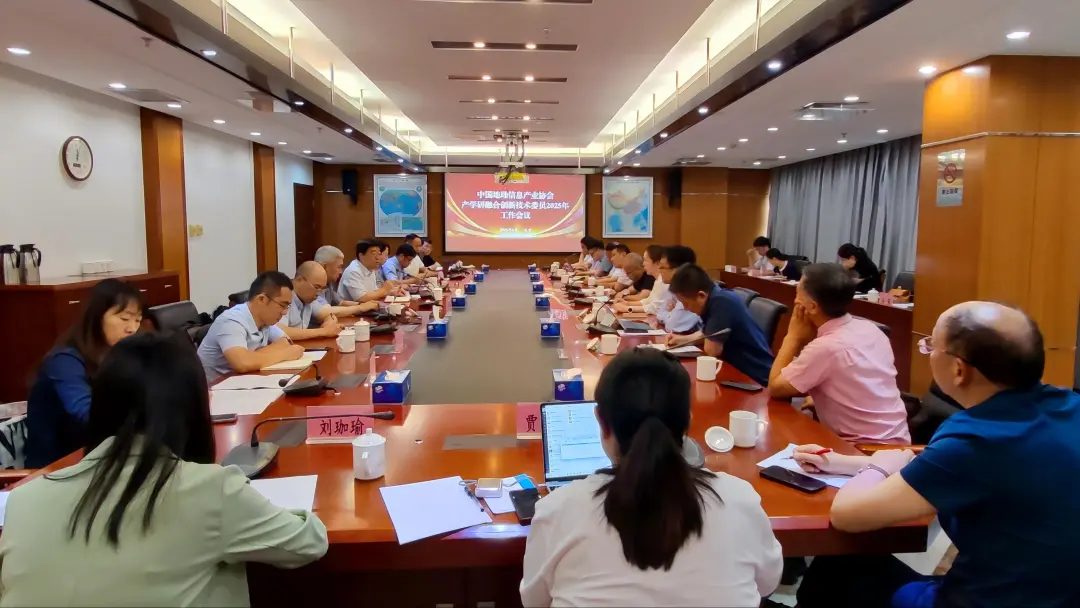 On June 23, the 2025 working meeting of the Industry-University-Research Integration Innovation Technical Committee (hereinafter referred to as the "Technical Committee") of the China Geographic Information Industry Association was held in Beijing. The meeting focused on how to better carry out the work of the Technical Committee and promote the integrated innovation development of the geographic information industry through industry-university-research collaboration. Mr. Li Weisen, President of the Association, attended the meeting and delivered a speech. Thirty representatives, including chairpersons and secretaries-general from 13 technical committees, participated in the meeting. The meeting was presided over by Ms. Wang Zengning, Vice President and Secretary-General of the Association.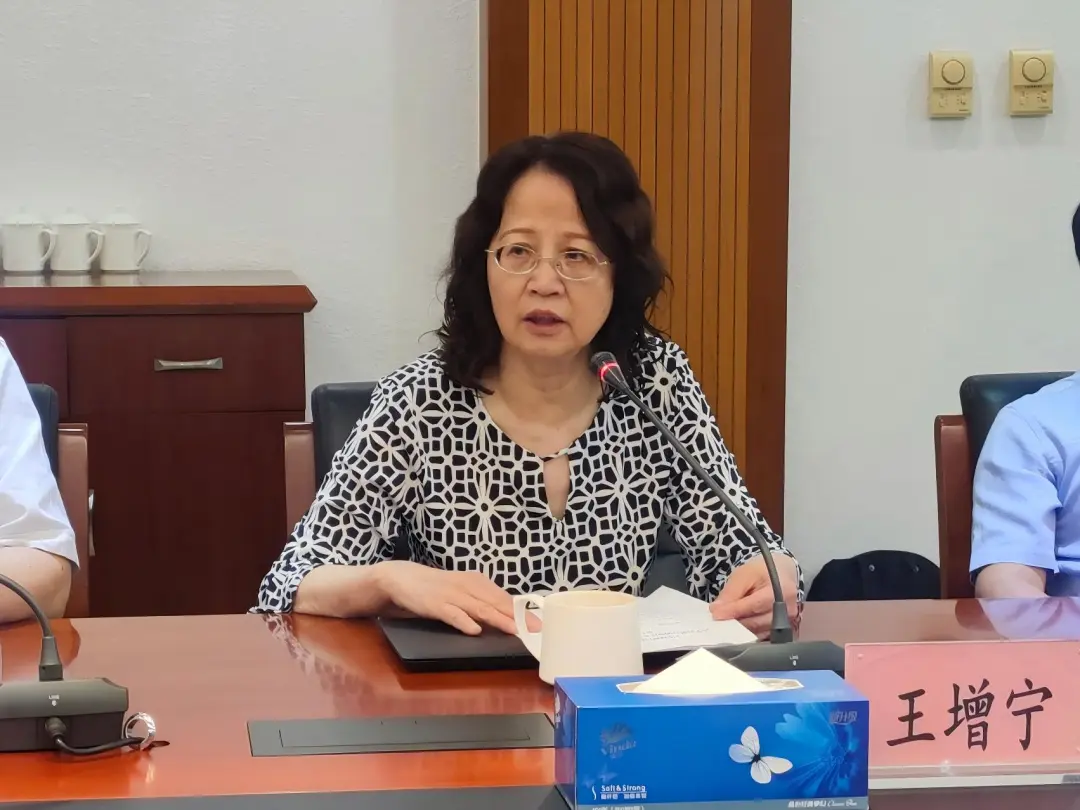
The Industry-University-Research Integration Innovation Technical Committee is a specialized branch established by the Association to enhance enterprise innovation efficiency, promote the efficient and deep integration of the innovation chain and industrial chain, and advance the integrated innovation work of the geographic information industry. During the meeting, representatives from the 13 technical committees reported on their main work achievements in recent years, the difficulties and problems encountered, and their future work plans. They shared their experiences in the operation and management of their respective committees and the implementation of their work. They also engaged in discussions and offered suggestions on how to further promote the development of the technical committees, fully leverage their roles, advance the industrialization of outcomes, and strengthen internal and external exchanges.
The representatives noted that, in recent years, the technical committees have respectively carried out work in innovative product R&D, core technology research, transformation of scientific and technological achievements, and professional talent cultivation, focusing on key areas of the geographic information industry. These efforts have contributed to the formation of an enterprise-led, market-oriented, and deeply integrated industry-university-research technological innovation system. To date, the technical committees have established four major models of industry-university-research cooperation: outsourcing corporate R&D needs to universities and research institutions, jointly applying for research projects with universities and research institutions, conducting collaborative R&D with universities and research institutions, and transforming the existing scientific research achievements of universities and research institutions. Among these, 12 have entered the product R&D stage, and 10 have begun market launch. The product outcomes cover multiple industries and scenarios, including SAR image processing and applications, intelligent mining and application services for remote sensing big data, spatiotemporal digital twin dynamic clouds, digital twin CIM foundational platforms, digital twin airport operational situation awareness, digital low-altitude intelligent service platforms, police resource spatial optimization, smart property management platforms, complex underground pipeline information acquisition and application, geological disaster and engineering safety intelligent monitoring, digital villages and village planning, and territorial spatial ecological restoration, among others.
The representatives unanimously agreed that the Association's work on the technical committees has provided an excellent platform for industry-university-research entities to strengthen cooperation and achieve integrated innovation. First, it helps enterprises apply for collaborative research projects, promotes two-way talent exchange between enterprises and universities, and facilitates talent cultivation across all parties involved. Second, it enables enterprises to make full use of industry-university-research innovation resources, accelerate the formation of innovative product technologies, and enhance their innovation capabilities and competitiveness. Third, it facilitates the transformation and transfer of scientific and technological achievements from universities and research institutions, and explores efficient models and mechanisms for industry-university-research collaboration. The attending representatives also put forward suggestions on strengthening exchanges and outcome promotion cooperation among the technical committees, expanding the number of committee members, incorporating user entities such as public institutions, exploring more reasonable mechanisms for outcome ownership and benefit distribution, and strengthening the publicity and promotion of outcomes as well as the study of relevant policies.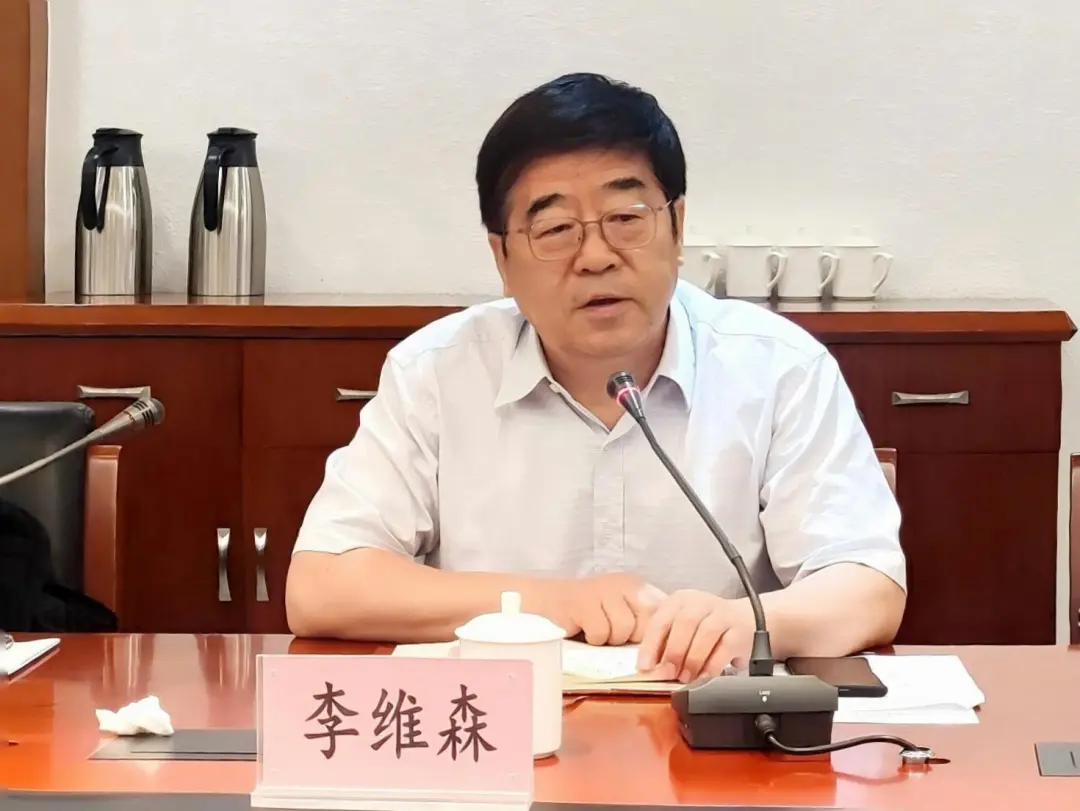
President Li Weisen fully affirmed the work of the technical committees. He stated that in recent years, the technical committees have carried out extensive research work and produced many outcomes, while also offering many valuable suggestions for their work. Overall, the technical committees have achieved significant progress and results. Regarding further improvements, he put forward three opinions. First, great importance should be attached and understanding enhanced. The work of the technical committees is an important measure for the Association to implement national policies on promoting industry-university-research integrated innovation and the transfer of scientific and technological achievements. It is also an innovative effort to address the low rate of achievement commercialization and the insufficient alignment between research outcomes and market demands in the geographic information industry. With the rapid development of new technologies such as artificial intelligence, geographic information enterprises—especially small and medium-sized ones—need to make greater use of the achievements and resources of universities and research institutions, leveraging their respective strengths for high-quality development together. Second, focus should be placed on core functions and the promotion of transformation. Efforts should be made to facilitate the transfer of scientific research achievements from universities and research institutions to enterprises. The platform of the technical committees can be used to jointly apply for research projects with universities and research institutions, jointly tackle technical challenges, solve technical difficulties, and cultivate talents collaboratively. Further research is needed on mechanisms for market-based outcome sharing and benefit distribution. The industry-university-research ecosystem should be expanded, cooperation spaces broadened, and innovative development of the technical committees explored. Third, leadership should be strengthened to promote innovative development. Chairpersons and other responsible persons of the technical committees should enhance work planning, unite vice chairpersons to pool collective wisdom, attract more proactive and innovative member units, proactively plan collaborative projects, and broaden the working ideas, mechanisms, and activity formats for industry-university-research cooperation. Greater efforts should be made in achievement transformation, promotion and application, and platform building. The Association's various communication and publicity platforms should be fully utilized to increase the publicity and promotion of the technical committees' work and outcomes.
The meeting also discussed the draft versions of the "Regulations on the Management of Technical Committees" and the "Evaluation Methods for Technical Committees," and solicited opinions and suggestions from the attending representatives.